
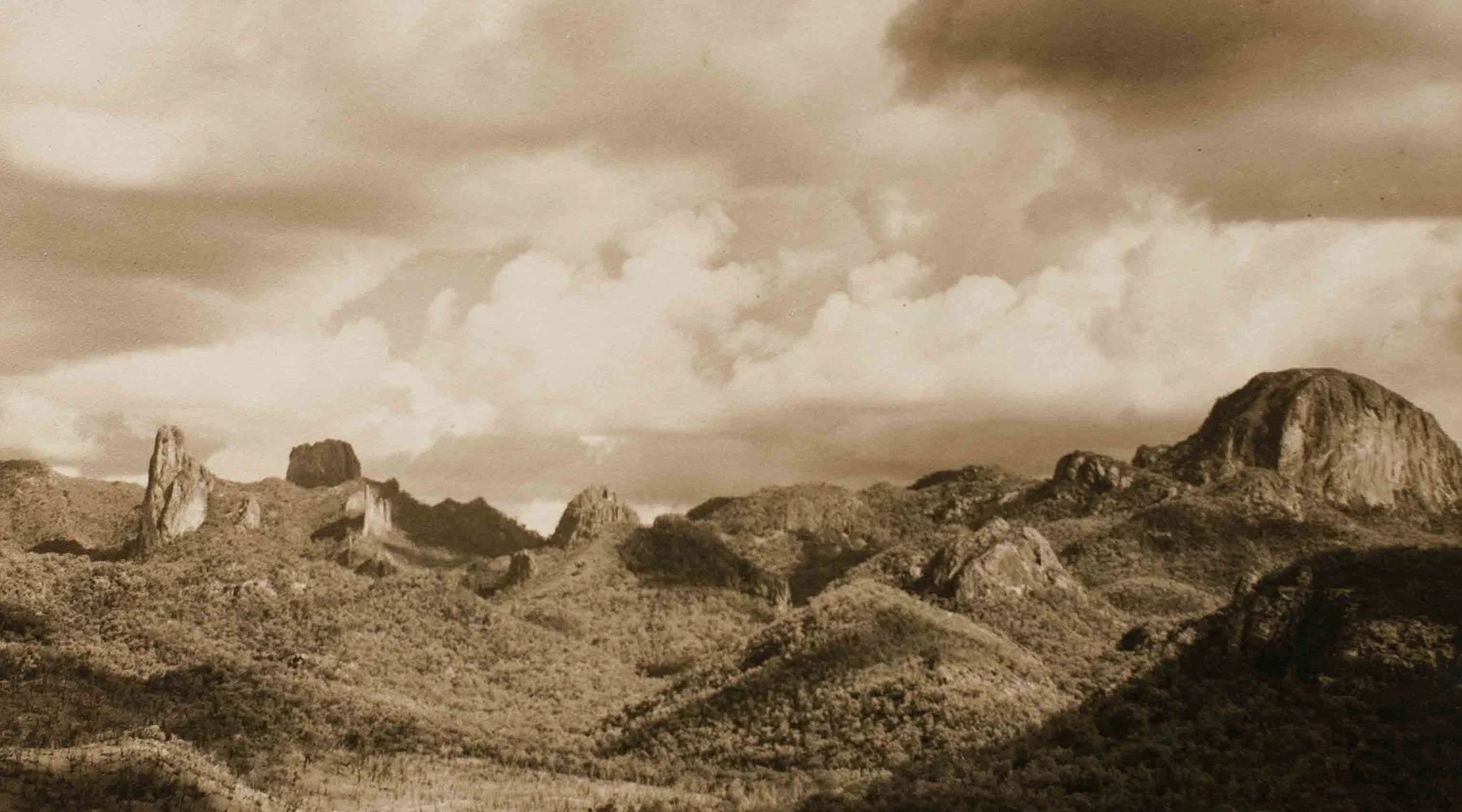
Frank Hurley, Warrumbungal Mountains NSW (detail), 1930s
Between Peaks and Silence
Frank Hurley
Between Peaks and Silence gathers Frank Hurley’s rare, luminous studies of place—where land becomes theatre and stillness becomes sound. From the Warrumbungles’ ancient ridgelines to the Blue Mountains’ shadowed caves, from the Derwent’s slow water to Urama Island’s village architecture, Hurley frames each scene with a patient eye for scale, texture and hush. In Antarctica, crevasses open like chapters—beauty edged with risk—reminding us how quickly terrain can turn. Shown together for the first time in more than 30 years, these photographs invite you to look longer: to follow the light, listen for quiet, and feel the world’s vastness in a single image.
Artist: Frank Hurley
Opening: Thursday 12 February 6pm
Exhibition: 13 February–30 May 2026
Where: BAMM Gallery
FREE
Biography
Frank Hurley (1885–1962) was one of Australia’s most celebrated and controversial photographers and filmmakers, renowned for his fearless pursuit of dramatic images and his role in shaping early documentary practice.
Born in Glebe, Sydney, Hurley ran away from school at thirteen and worked briefly in a Lithgow steel mill before returning home to study at night. Largely self-taught, he developed an early passion for photography, quickly gaining a reputation for technical mastery and extraordinary risk-taking. By 1910 he had mounted his first exhibition in Sydney, attracting attention for both the quality and daring of his work.
Hurley’s career took a decisive turn in 1911 when Douglas Mawson appointed him official photographer of the Australasian Antarctic Expedition. Working under extreme conditions, he produced remarkable still photographs and film footage, later presented as Home of the Blizzard. He went on to document further Antarctic ventures, including Sir Ernest Shackleton’s ill-fated Endurance expedition, creating some of the most iconic images of polar exploration ever made.
During World War I, Hurley served as honorary captain and official photographer with the Australian Imperial Force. His dramatic images of the Western Front, including Morning at Passchendaele, revealed both the devastation and the strange beauty of war, though his use of composite images sparked heated debate about authenticity. Similar tensions followed him throughout his career.
In the 1920s and 1930s, Hurley undertook ambitious expeditions across northern Australia, Papua, and the Torres Strait, producing popular films, books and lectures that captivated public audiences. He later returned to Antarctica with Mawson, earning the Polar Medal and, in 1941, appointment as an OBE.
Restless and self-styled as ‘Captain” Hurley’, he remained a compelling, if polarising, figure. For more than three decades, his work profoundly influenced Australian photography and documentary film, leaving a legacy defined by adventure, innovation and controversy.